

Semi-automatic screen printing machines
Flatbed, cylindrical and vacuum machines for medium runs and large formats.
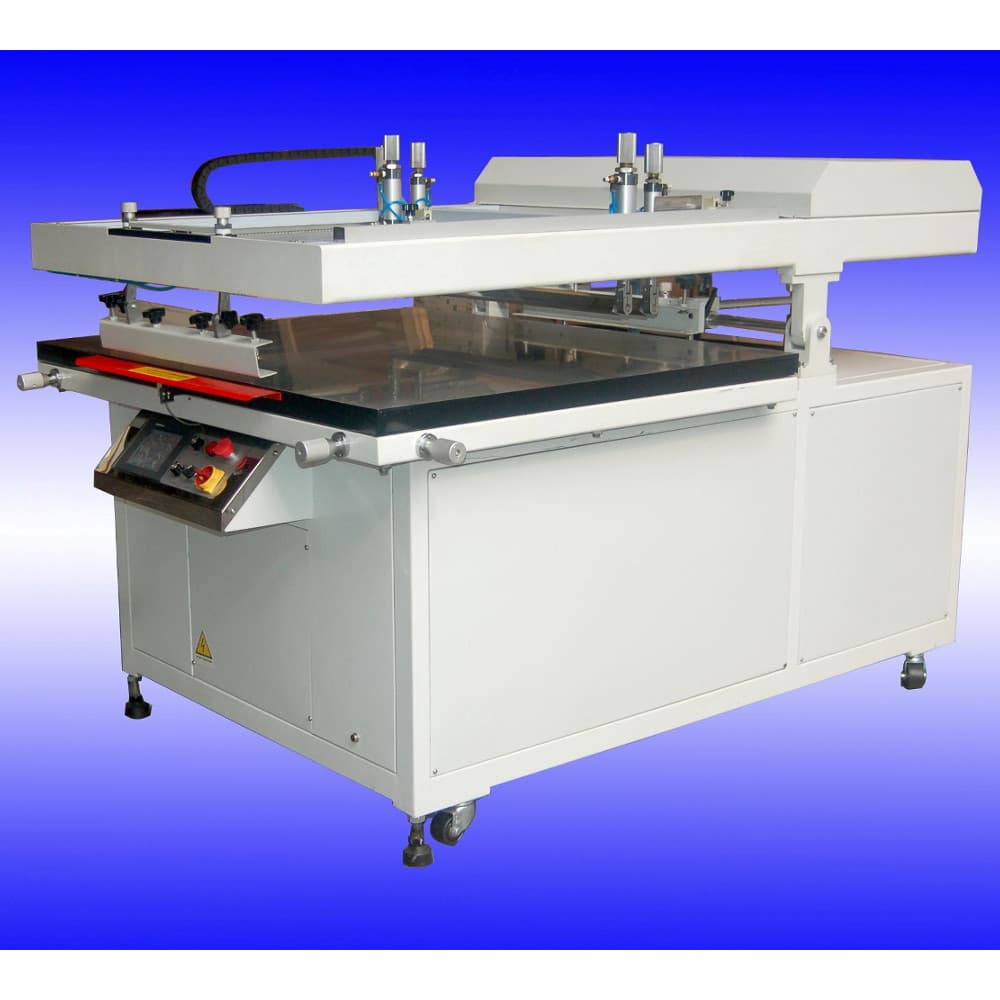
Flatbed screen printing machine with oblique arms – SS90120
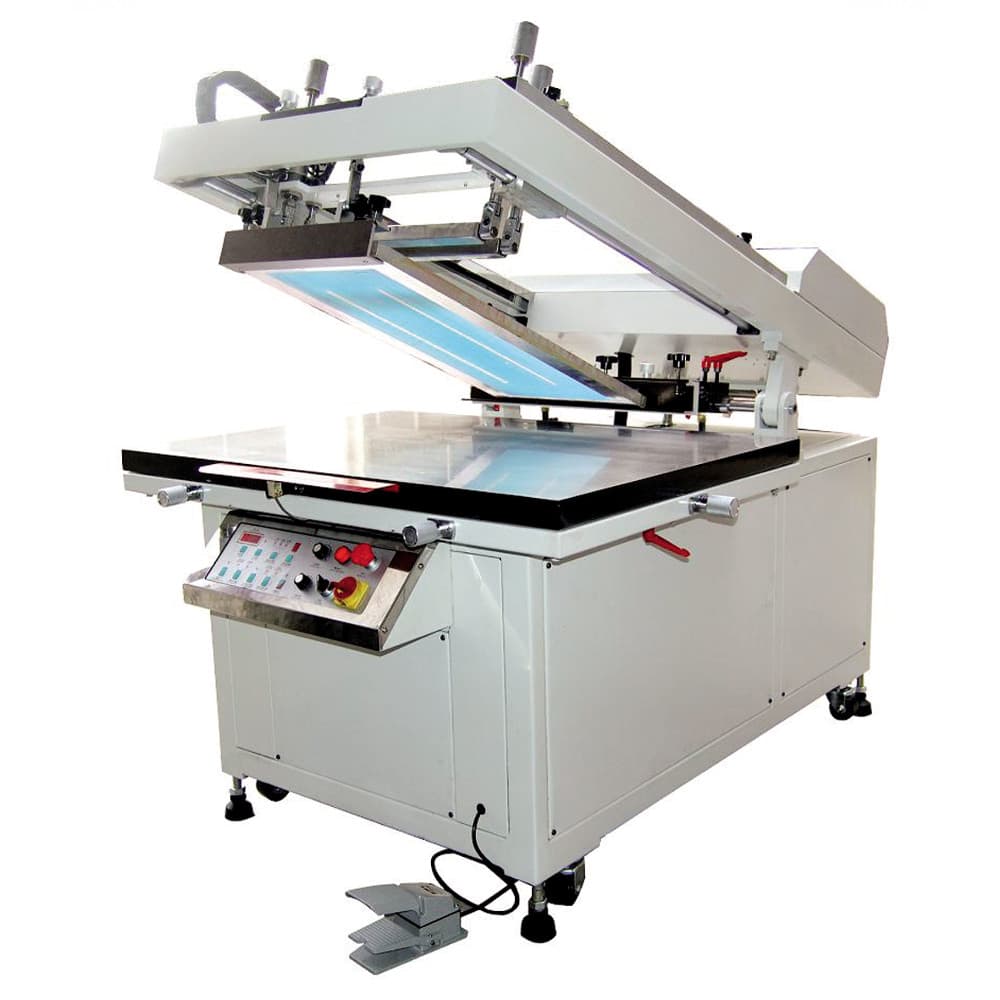
Flatbed screen printing machine with oblique arms – SS6090
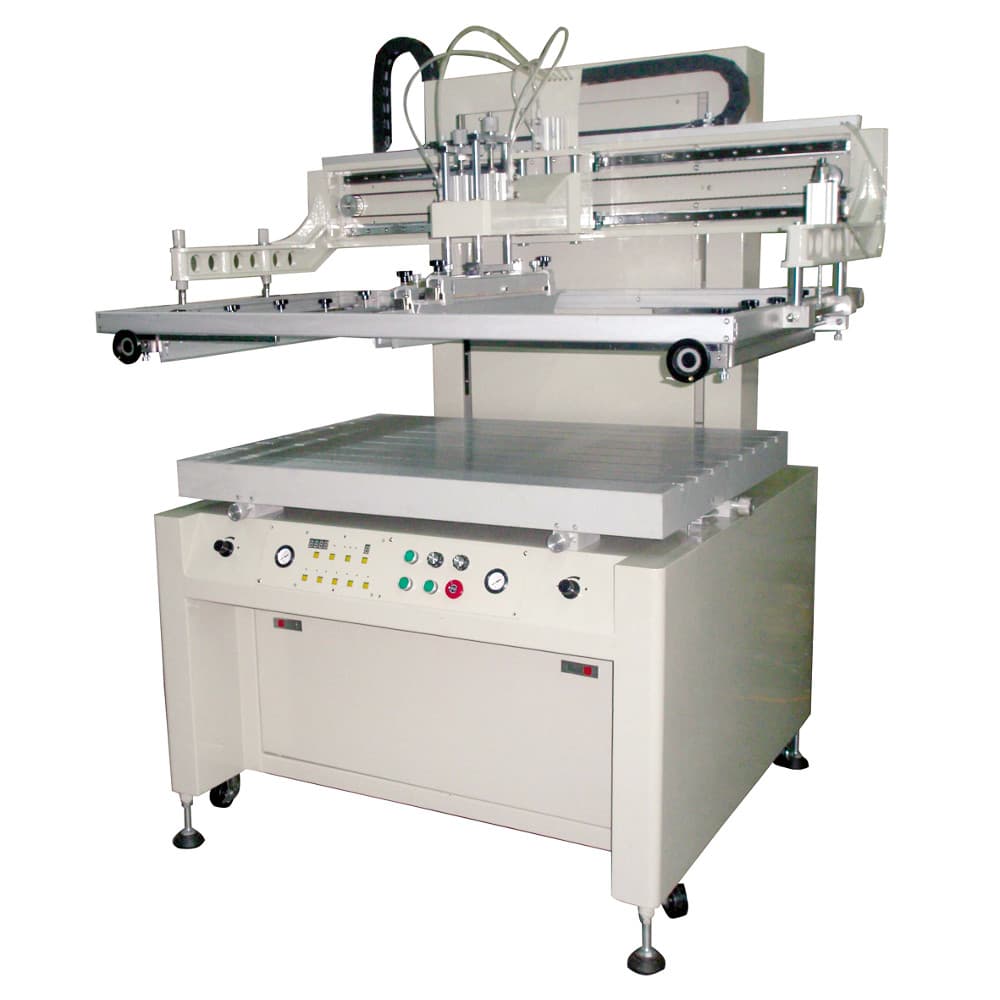
Vacuum flatbed screen printing machines – S6080/70100/90120
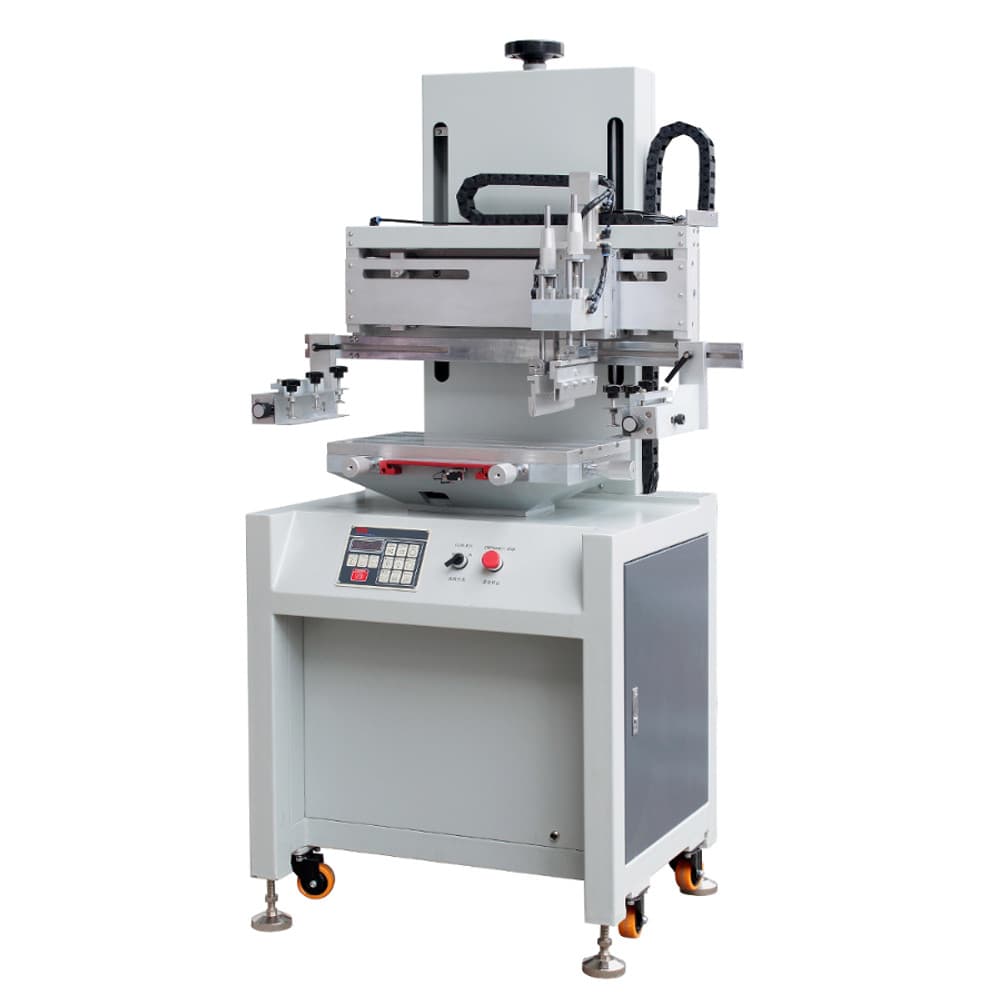
T-slot flatbed screen printing machines – S3040T/S4060T/S5070T
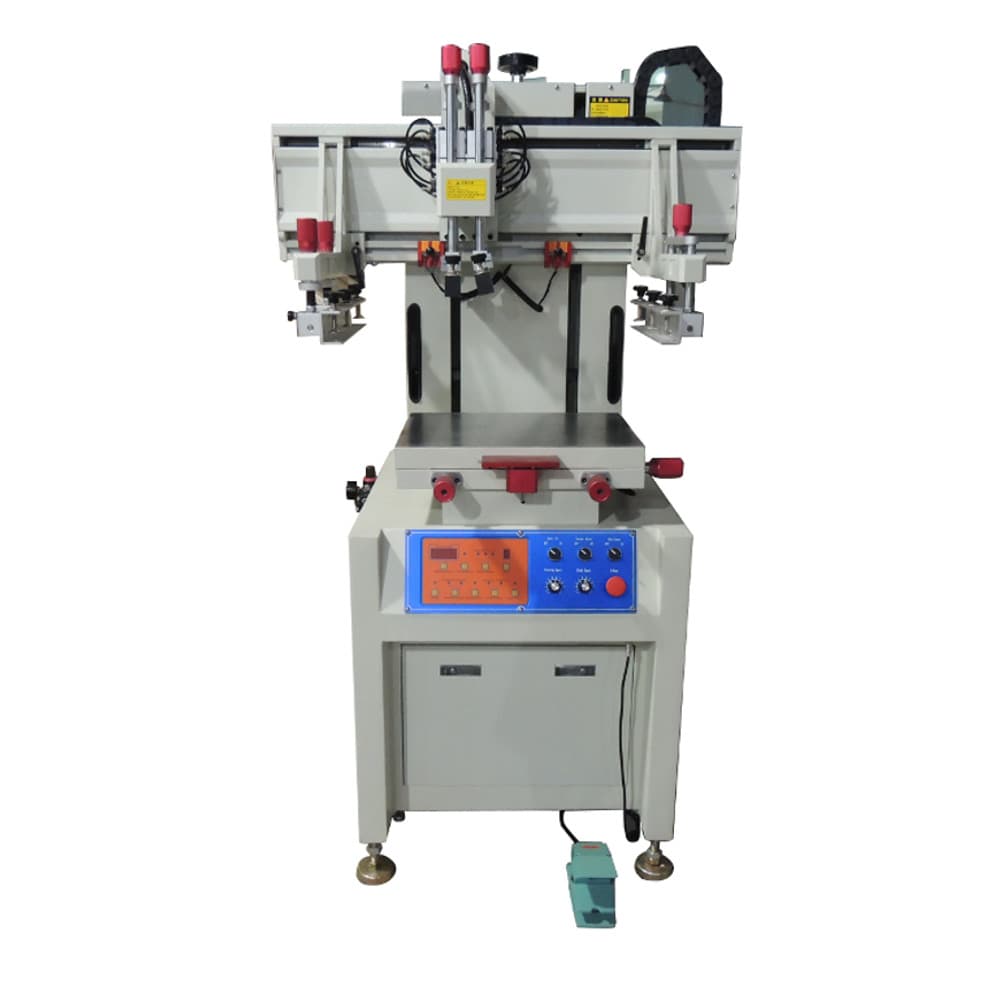
Vacuum flatbed screen printing machines S3040/S4060/S5070
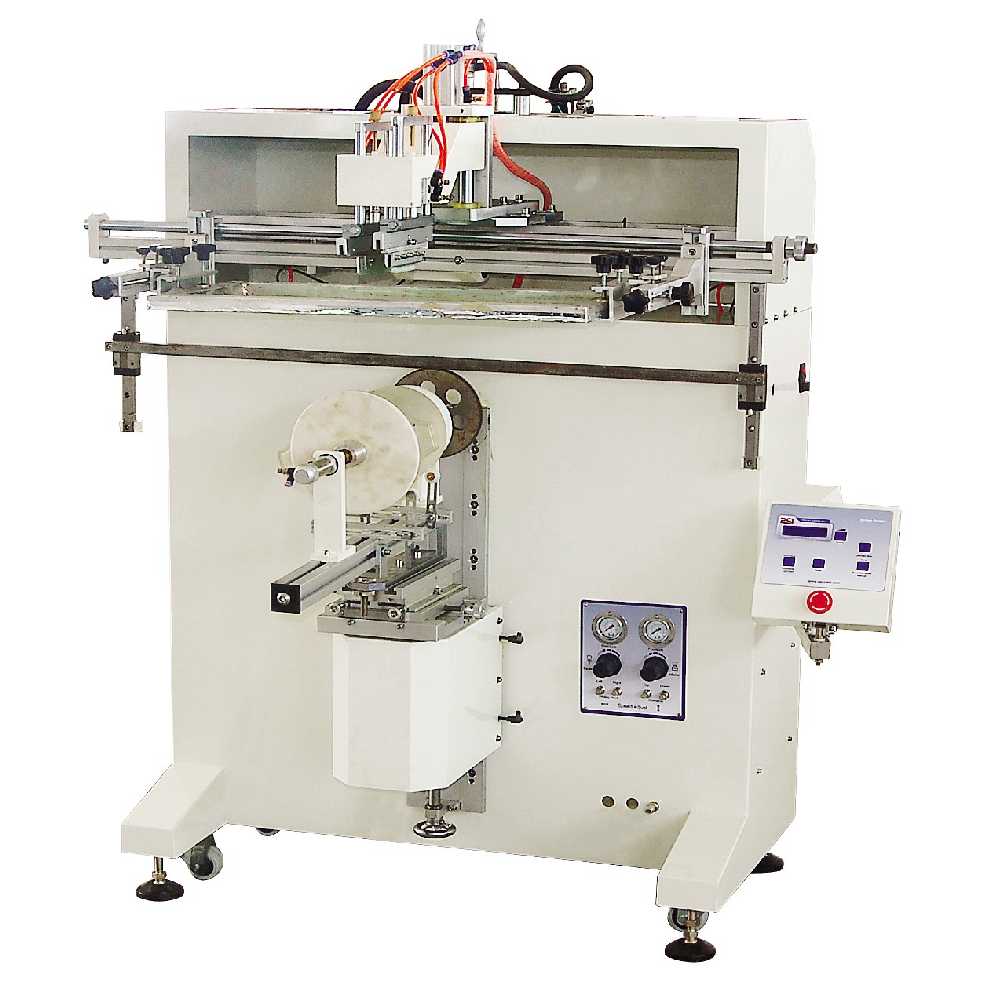
Cylindrical/oval/flat screen printing machines S300/400/650/1000
Technical guide
Semi-automatic screen printing: the balance between control and volume
On a semi-automatic machine the operator loads and unloads the part, and the machine does the rest. It is the format that covers medium runs with frequent job changes, and the one that gives the biggest leap in quality compared with printing by hand.
What does it gain over manual printing?
Consistency. The machine keeps the squeegee pressure, angle and stroke speed fixed throughout the run, which is exactly what an operator cannot sustain by hand part after part. The result is a uniform ink thickness and registration that does not drift halfway through a run.
Flatbed, cylindrical and vacuum
The flatbed machine prints flat surfaces, with the mesh moving over the stationary part. The cylindrical machine rotates the part in sync with the squeegee to handle bottles, jars, cups and round or oval containers. The vacuum table holds thin or flexible materials (paper, board, plastic film, vinyl) by suction and keeps them flat: without vacuum, the substrate lifts as it peels away from the mesh and registration is lost.
Screen tension is what counts
Mesh tension, measured in newtons per centimetre, determines registration and the amount of ink deposited. A slack mesh peels away from the part late, drags the image and throws the colours out of register. Controlling that tension with a stretcher and measuring it before each run is what makes a multicolour job repeatable; it is also why screens are a consumable and not permanent equipment.
How to choose the screen printing mesh count
The number of threads per centimetre defines the detail that can be reproduced and the thickness of ink that passes through. Low-count meshes lay down a lot of ink and are used for solid areas of colour and high opacity; fine meshes reproduce detail and halftones but deposit less. The choice is linked to the ink and the substrate; it is not decided separately.
How much space to set aside
The exact dimensions are in the technical sheet for each model, but when planning the workshop you have to add drying, the exposure unit and the screen washing and reclaiming area. The printing machine is rarely what takes up the most room in the line.
Frequently asked questions
About semi-automatic screen printing
What does the operator do on a semi-automatic screen printing machine?
Loads and unloads the part. The squeegee and mesh movements are made by the machine, so the pressure, angle and stroke speed stay constant throughout the run, which is exactly what cannot be achieved when printing by hand.
What is a vacuum table for in screen printing?
To hold thin or flexible materials (paper, board, plastic film, vinyl) by suction and keep them completely flat during printing. Without vacuum, the substrate lifts as it peels away from the mesh and registration is lost.
What is the difference between a flatbed and a cylindrical screen printing machine?
The flatbed machine prints flat surfaces with the mesh moving over the stationary part. The cylindrical machine rotates the part in sync with the squeegee stroke, so the print unrolls onto the curved surface without distortion: it is the one that handles bottles, jars, cups and round or oval containers.
What is the maximum print format?
It depends on the model: the catalogue covers everything from benchtop formats to equipment designed for large formats and medium runs. The figure that matters is the usable print area of each machine, which is given in the technical sheet for each piece of equipment.
How much space does a semi-automatic screen printing machine take up?
The exact dimensions are in the technical sheet for each model, but when planning the workshop you should also allow space for drying, the exposure unit and screen washing and reclaiming: the printing machine is rarely what takes up the most room in the line.