

Auxiliary equipment for screen printing and pad printing
UV ovens, exposure units, screen stretchers and surface treatment.
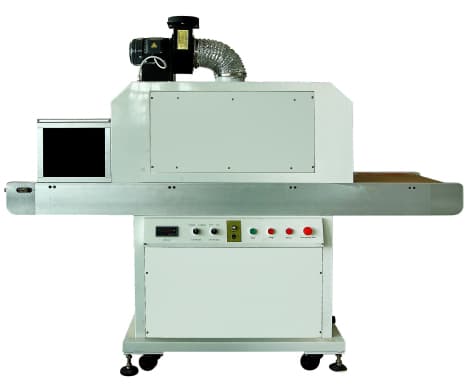
UV400/800/1000 flat UV curing ovens
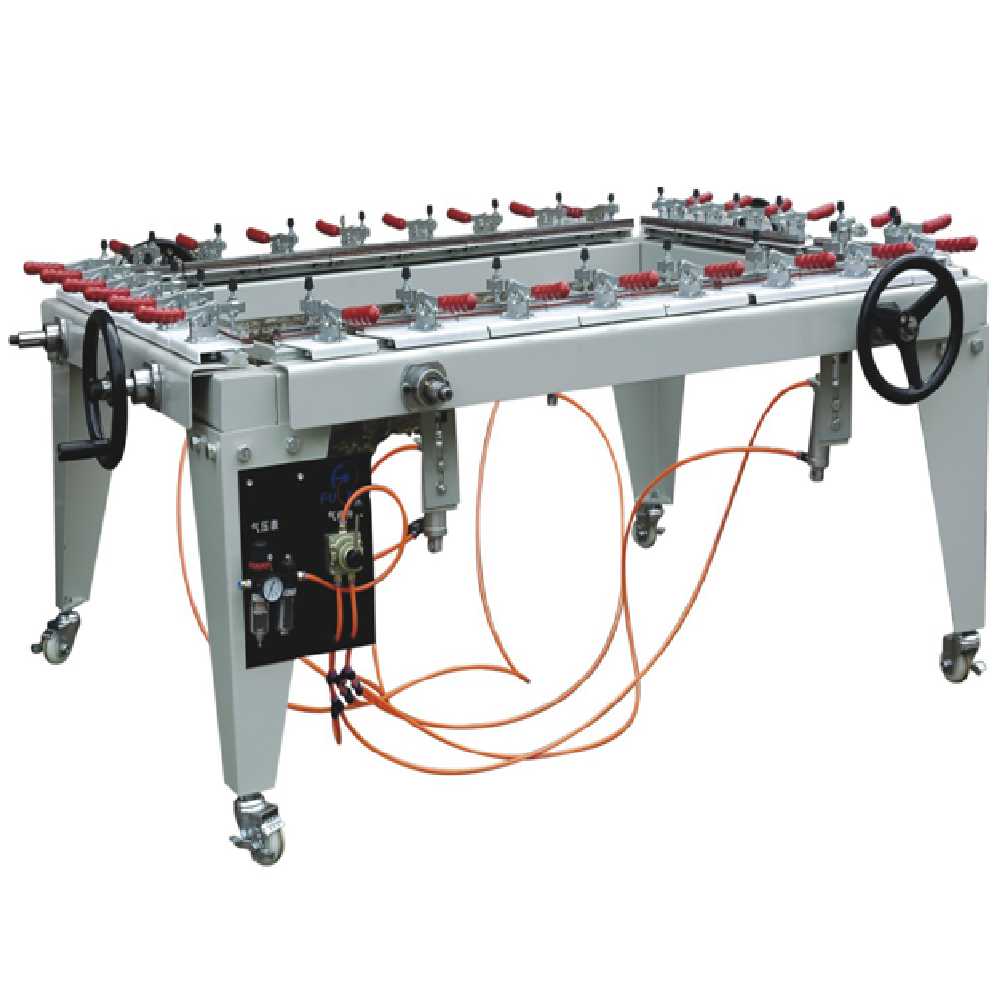
T1215 screen stretcher
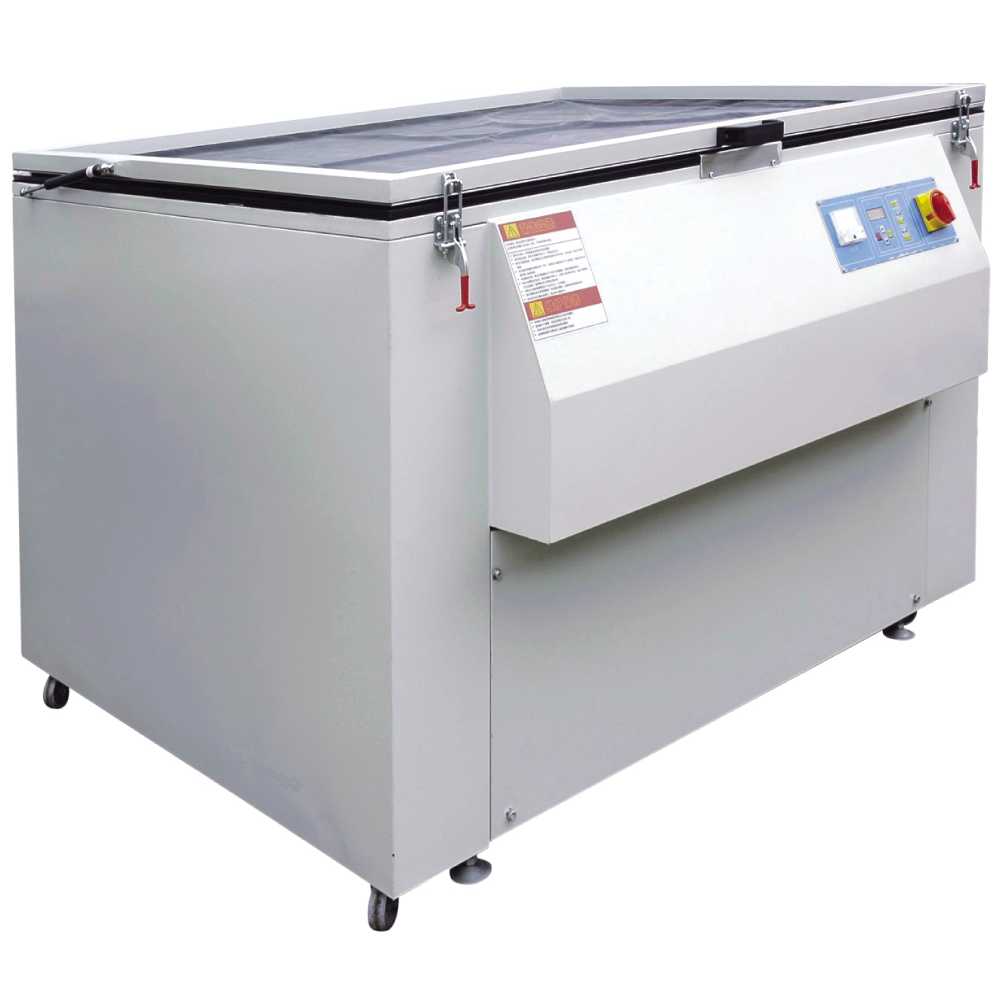
E8010/E1013 screen printing exposure units
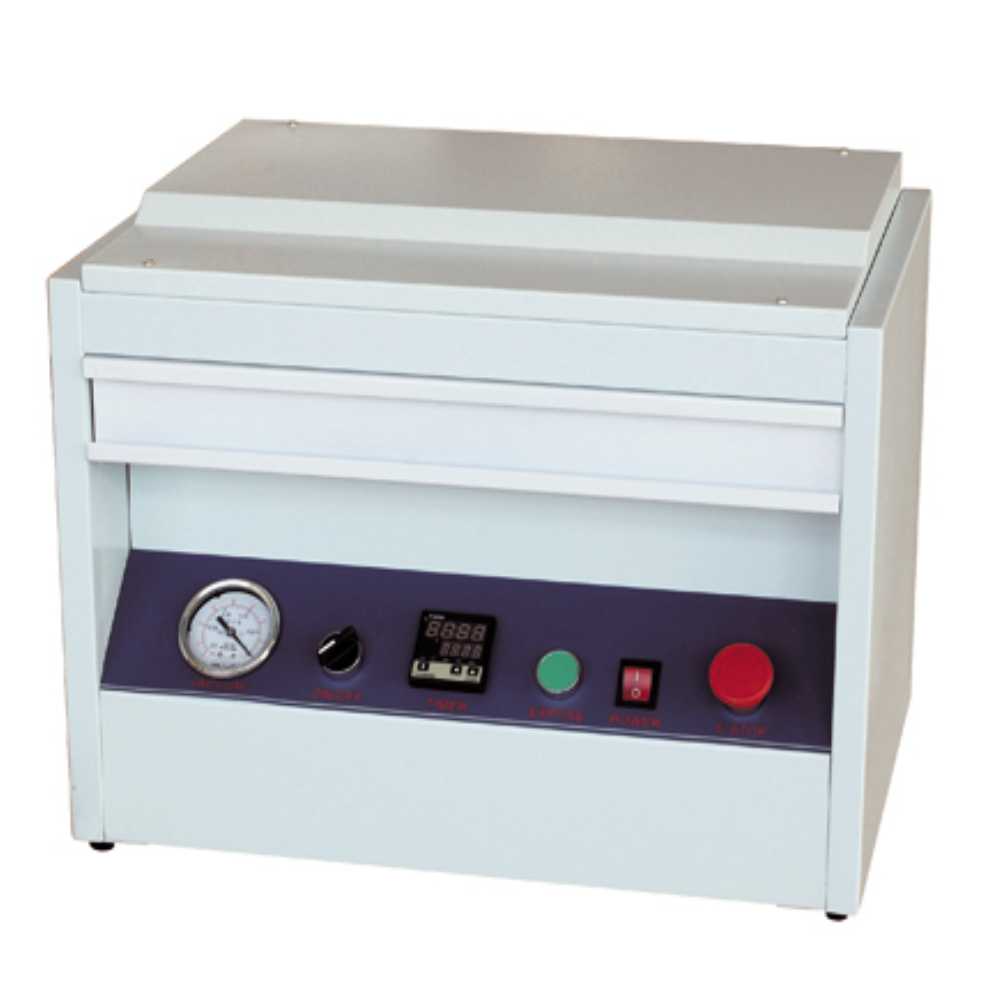
E345D pad printing exposure unit
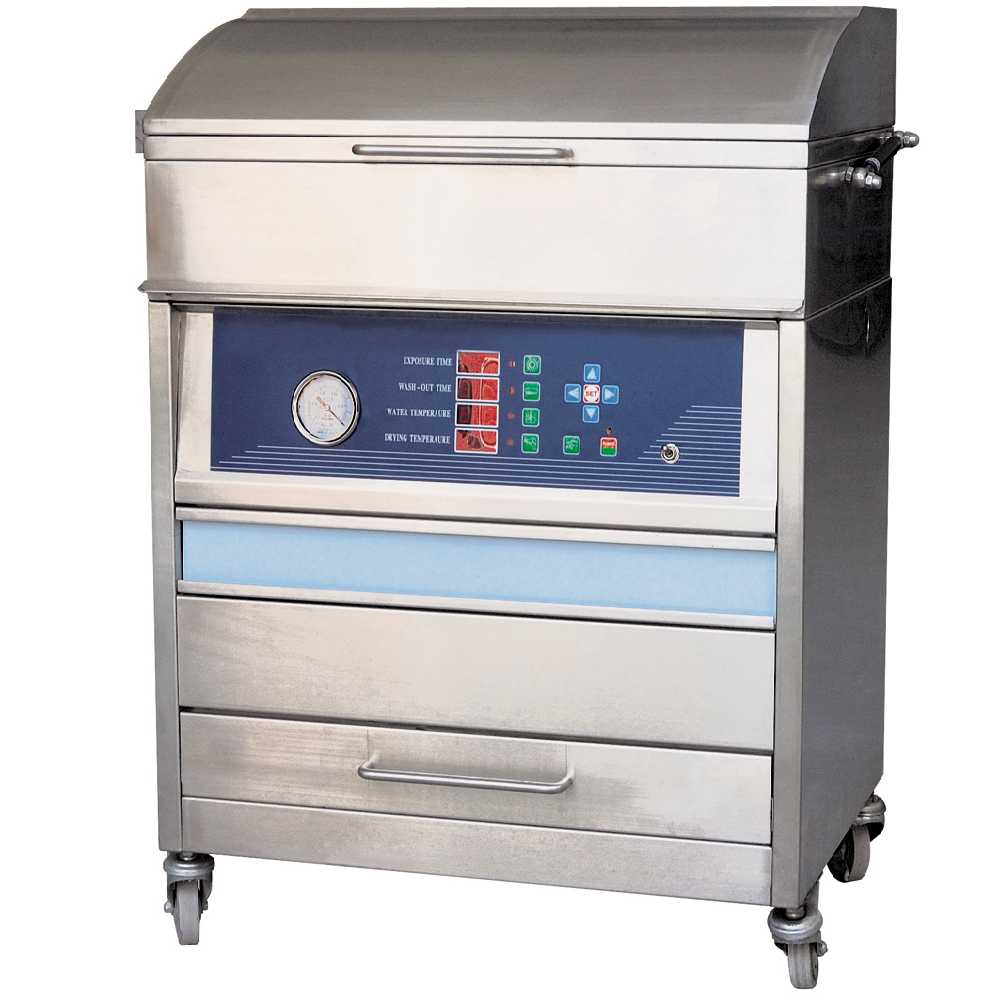
3-in-1 exposure units for polymer plates
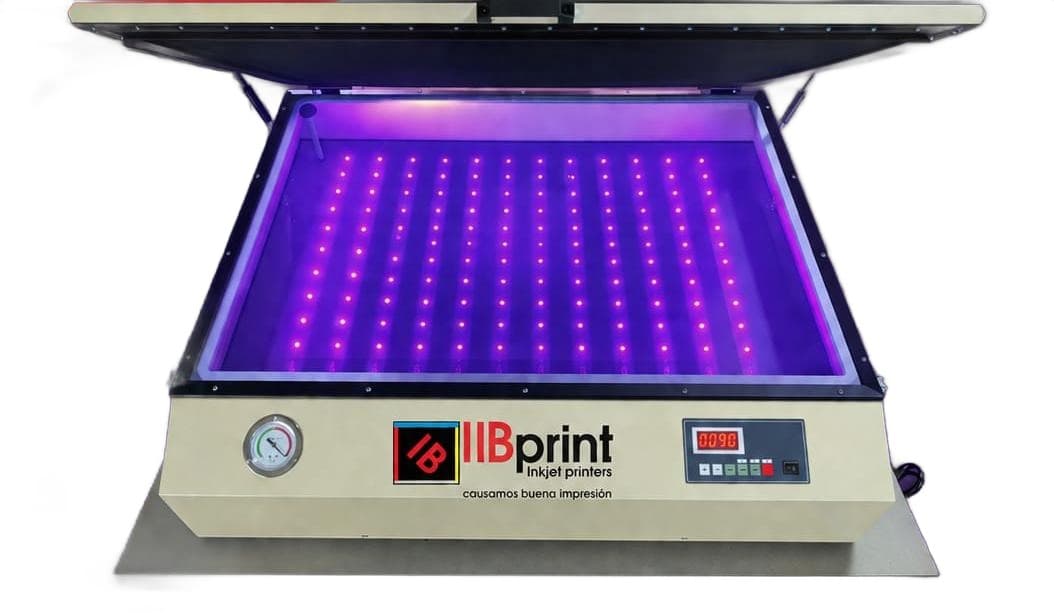
UV LED exposure unit for screen printing
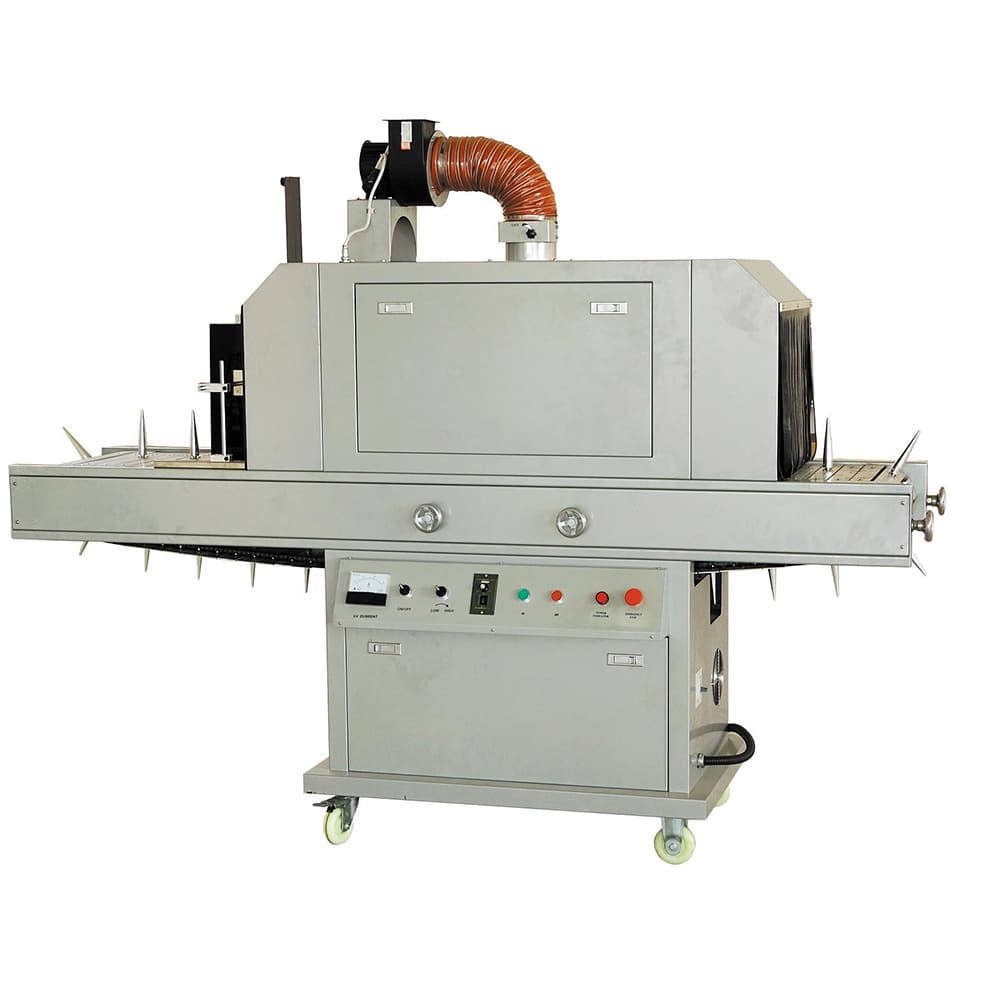
UV400MRF flat/cylindrical/oval UV dryer
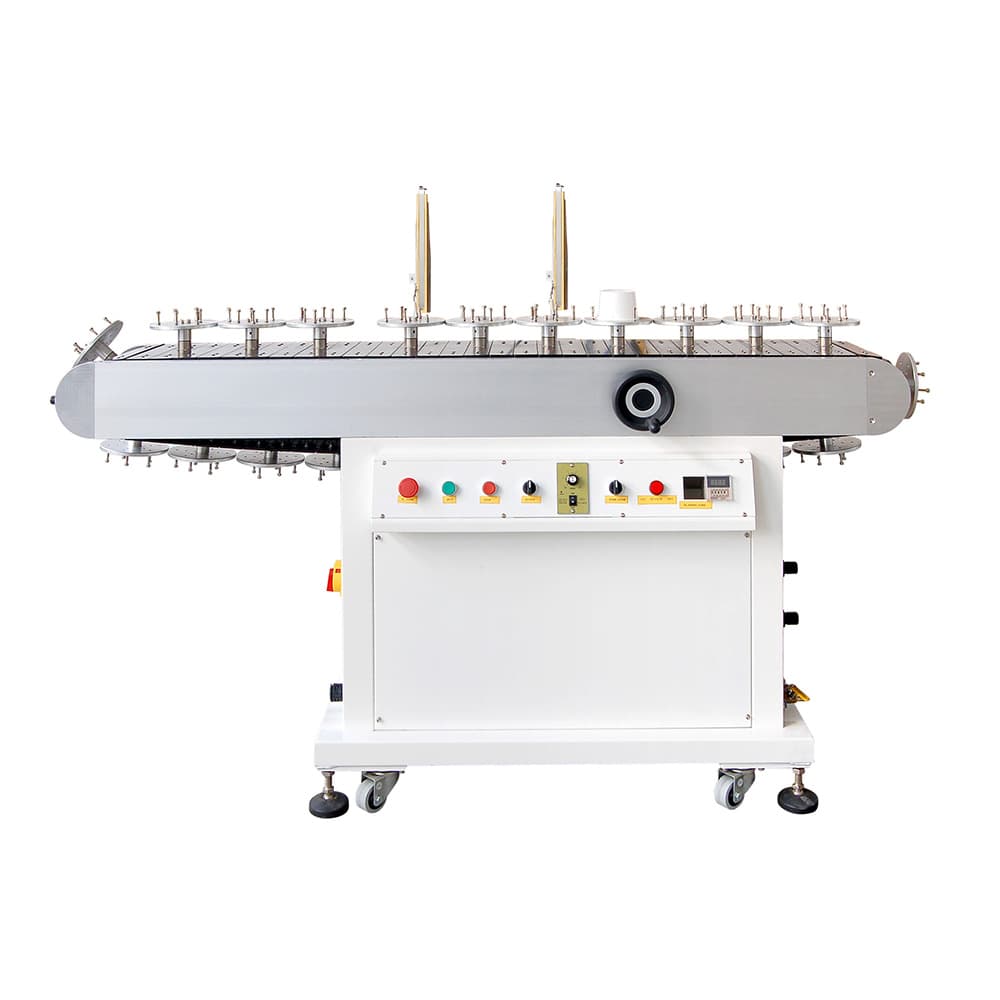
F300 flame treatment machine
Technical guide
The equipment that makes the printing line possible
Around the printing machine there are three processes without which there is no production: preparing the screen, curing the ink and conditioning the surface of the part. This is the auxiliary equipment, and it often has more say in the final quality than the printing machine itself.
What is a screen printing exposure unit for?
To transfer the design onto the screen. The mesh is coated with photosensitive emulsion and exposed to ultraviolet light through the film positive, and the emulsion hardens everywhere except where the design has shielded it. When washed out with water, those areas open up and that is where the ink will pass through. Exposure time and light source power determine the achievable definition: underexposure ruins fine detail and overexposure closes up fine lines.
UV, UV-LED and infrared: how they differ
Conventional inks dry by solvent evaporation, with heat or over time, and that is what air tunnels and infrared ovens are for. UV inks do not dry: they polymerise in fractions of a second under ultraviolet light, so the part can be handled straight away and production can run at high speed. UV-LED achieves the same with diode lamps, which use less energy, need no warm-up, last longer and transfer much less heat to the part, which is decisive with plastics prone to deformation.
When is surface treatment needed?
Whenever you print on low-surface-energy materials, which in practice means polypropylene and polyethylene. Flame treatment, corona treatment and atmospheric plasma raise the surface tension of the material just before printing so the ink wets and adheres. Surface tension is checked with test inks calibrated in dynes: if the material does not reach the value the ink requires, the print will eventually come away however correct the rest of the process may be.
Stretching and reclaiming screens
The stretcher fixes the mesh to the frame at working tension, and the reclaiming process removes the spent emulsion so the frame can be reused. Both are daily routine in a screen printing workshop: the screen is a consumable that is prepared, used and reclaimed, and the consistency of that cycle shows directly in registration.
Frequently asked questions
About auxiliary equipment
What auxiliary equipment does a screen printing workshop need?
At the very least, something to expose and develop the screens, something to dry or cure the ink and something to stretch and reclaim the meshes. In the IBPRINT catalogue that means exposure units, UV ovens and tunnels, screen stretchers and surface treatment equipment.
What is a screen printing exposure unit for?
To transfer the design onto the screen. The mesh is coated with photosensitive emulsion and exposed to ultraviolet light through the film positive, and the emulsion hardens except where the design has shielded it; when washed out with water, those areas open up and that is where the ink will pass through. Exposure time and light source power determine the definition that can be achieved.
What is the difference between UV curing, UV-LED curing and air drying?
Conventional inks lose solvent by evaporation, with heat or over time. UV inks do not dry: they polymerise in fractions of a second when exposed to ultraviolet light, so the part can be handled straight away. UV-LED does the same with diode lamps, which use less energy, need no warm-up and transfer much less heat to the part, which matters with heat-sensitive plastics.
When is surface treatment (flame or corona) needed?
With low-surface-energy plastics such as polypropylene and polyethylene, where the ink does not anchor on its own. Flame treatment, corona treatment or plasma raise the surface tension of the material just before printing so the ink wets and adheres. Without that step, the print comes away even if the ink is the right one.
Why do screens need to be stretched?
Because mesh tension determines registration and the amount of ink deposited. A slack mesh peels away from the part late, drags the image and throws the colours out of register; stretching it and controlling that tension is what makes a multicolour run repeatable.