

Screen printing, pad printing and UV inks
Screen printing, pad printing and UV-UVLED inks, with a downloadable datasheet.
Technical guide
How to choose the ink: substrate, resistance and curing
The ink is where it is decided whether a print holds or comes off with a fingernail. It is not chosen by colour but by three linked criteria: which material is being printed, what the part will have to withstand afterwards, and which system will dry or cure it.
Substrate first
The same design on ABS, on glass and on polypropylene calls for three different ink families. Engineering plastics (ABS, polycarbonate, PMMA, polyamide, polystyrene, rigid PVC, POM) each have their own adhesion range. Glass and ceramics require specific inks and, often, thermal post-curing. Polyolefins need pretreatment. Metals and coated surfaces take their own formulations. Every ink in the catalogue has a downloadable technical sheet with the recommended substrates.
Then, the resistance required
An indoor promotional item is not the same as a control knob that will spend ten years on a car dashboard. You have to establish in advance what the print has to withstand: scratching and abrasion, solvents and cleaning products, sweat and creams, weathering and ultraviolet radiation, dishwashers or sterilisation. That requirement is what decides whether a one-component ink is enough or a two-component ink is needed.
One-component and two-component: when a hardener is needed
A one-component ink dries by solvent evaporation or by UV curing, and that is enough for many applications. A two-component ink is mixed with a hardener or catalyst before printing and, as well as drying physically, it cross-links chemically: that is what gives adhesion and resistance a one-component ink cannot reach. In return it has a limited pot life once mixed, so only the quantity that will be used during the shift is prepared.
UV and UV-LED inks
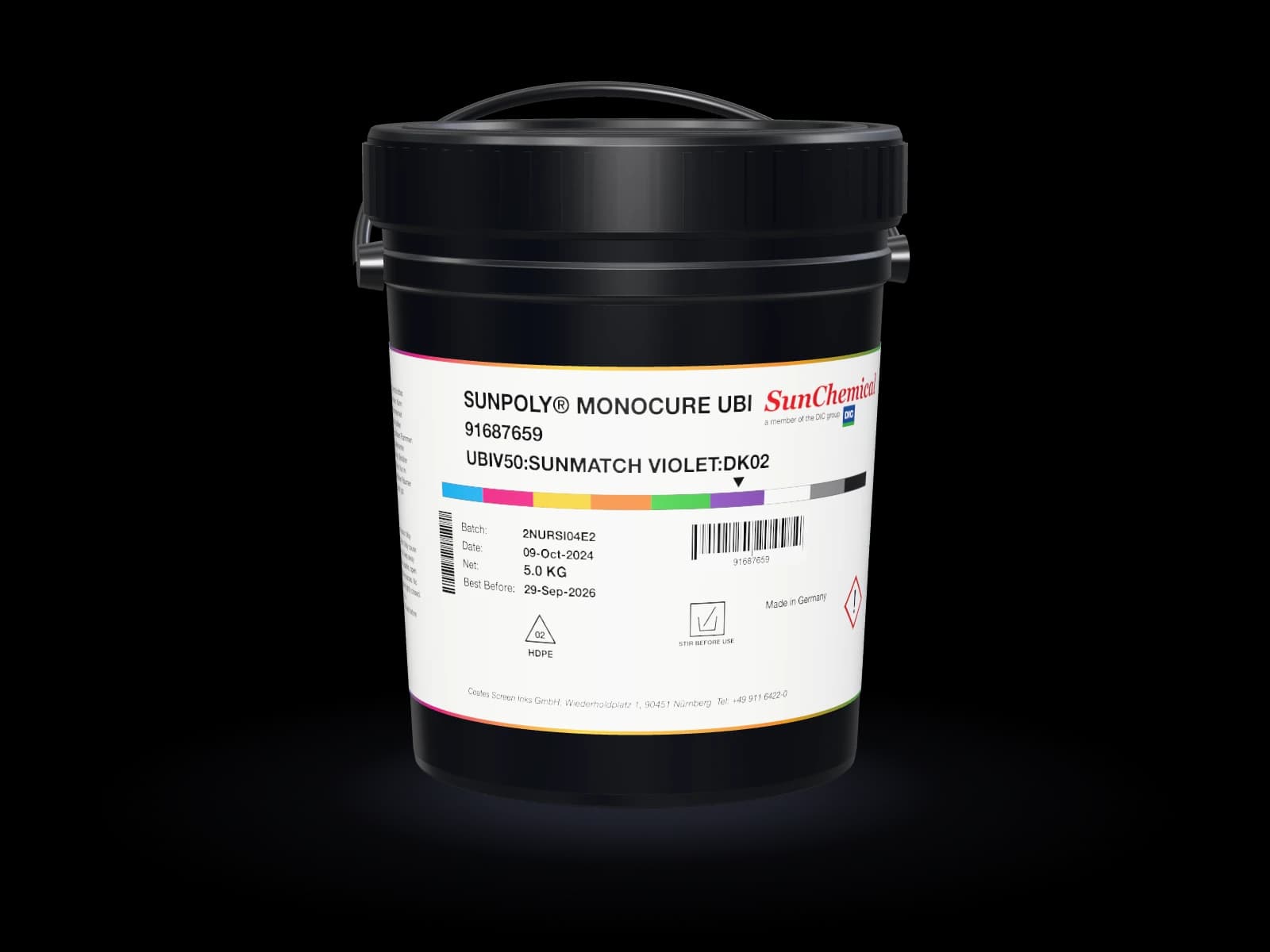
They do not dry; they polymerise instantly under ultraviolet light. That eliminates drying times and solvent evaporating into the air, and enables high-speed printing and in-line multicolour work. Inks formulated for UV-LED cure with diode lamps, which use less energy and give off less heat. They require the curing equipment to be sized to the ink: an underpowered lamp leaves the film not fully polymerised, and that shows up as poor adhesion weeks later.
Screen printing and pad printing do not share ink
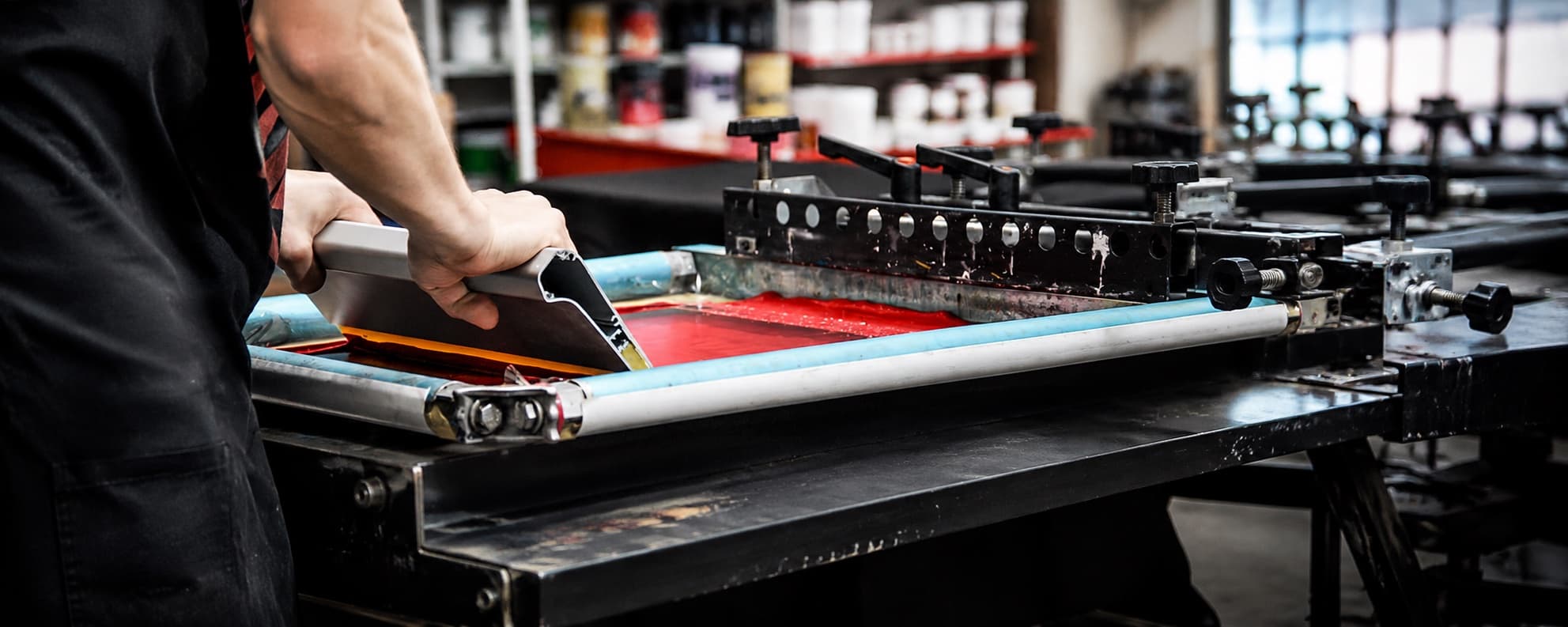
Even if the pigment is the same, the behaviour is not. Pad printing ink is formulated to evaporate solvent very quickly on the surface of the pad (just enough to become tacky and release onto the part) and to deposit extremely thin films. Screen printing ink passes through the mesh and leaves a considerably thicker layer, with a different rheology and different timings. They are not interchangeable.
Always run tests first
Different grades of the same plastic, release agents left on the part and variations in pretreatment mean two batches of the same material can behave differently. That is why technical sheets recommend adhesion tests before starting production, normally a tape test after full cure, which with two-component inks can take days to reach.
Frequently asked questions
About inks
How do you choose the ink for a specific material?
By substrate first, and then by the resistance the part has to withstand: scratching, solvents, weathering, washing or sterilisation. The same design on ABS, on glass or on polypropylene calls for three different ink families, and polypropylene also requires pretreatment. Every ink in the catalogue has a downloadable technical sheet listing substrates and resistance properties.
What is a two-component ink and when is a hardener needed?
A two-component ink is mixed with a hardener or catalyst before printing and, as well as drying physically, it cross-links chemically. It is used when adhesion and resistance are needed that a one-component ink cannot provide: outdoor use, contact with solvents or chemicals, aggressive washing. In return it has a limited pot life once mixed, so only the quantity that will be used is prepared.
How do screen printing inks differ from pad printing inks?
In behaviour, not in colour. Pad printing ink is formulated to evaporate solvent very quickly on the surface of the pad (just enough to become tacky and release onto the part) and to deposit extremely thin films. Screen printing ink passes through the mesh and leaves a considerably thicker layer, with a different rheology and different timings. They are not interchangeable.
What are UV and UV-LED inks?
Inks that do not dry by evaporation but polymerise instantly under ultraviolet light. That makes it possible to print and handle the part almost straight away, with no drying times and no solvent evaporating, and it enables high-speed printing. UV-LED inks are formulated to cure with diode lamps, which use less energy and give off less heat.
Can you prepare a specific colour for me?
Colour and substrate advice is part of the service: tell us the material of the part, the colour reference you need to match and the resistance required, and we will point you to the right ink family and the right approach.
Where can I download an ink's technical data sheet?
On the page for each ink in the catalogue, when the manufacturer publishes it. The sheet lists recommended substrates, compatible hardeners and thinners, drying or curing conditions and the product's resistance properties.